Your Designer Isn’t the Problem. Your Process Is

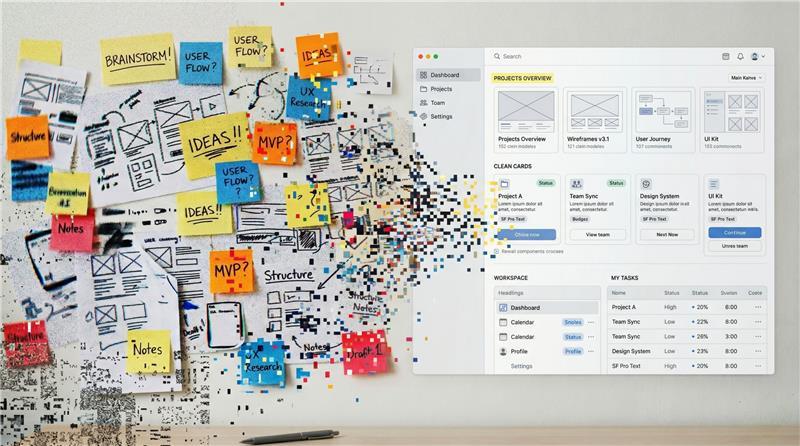
Great design is not conceived, it’s discovered when your process is attuned to what users reveal; most innovation problems begin where that listening fades.
The most innovative design decisions I've been part of didn't come from a brainstorm or a brilliant designer having a good day. They came from something a user said, or did, that nobody in the room had anticipated.
After ten years of enterprise UX, I've become increasingly sceptical of how the design industry talks about creativity. We celebrate individual designers. We treat breakthrough ideas as the output of rare talent. We hire for "creative instinct" and then wonder why the work feels competent but never quite surprising.
The problem is the assumption itself. Great design ideas don't originate in a designer's imagination. They emerge from contact with real users in real contexts, from unexpected behaviour, unvoiced frustration, and the workaround nobody designed for. That’s where innovation lives. And this is exactly where a strong product design process begins to matter. And you can't stumble into it. You need a process that creates the conditions to find it.
Why a Designer’s Imagination Is Only a Starting Point, Not the Source of Truth
A designer working from a brief is working with assumptions, their own understanding of the user, the client’s stated requirements, and analogies from other products they’ve seen. These inputs can produce competent work, but they rarely generate the kind of insight that genuinely changes how a product is used.
Within any product design process, real understanding doesn’t come from assumptions alone.
The turning point almost always comes from real user interaction. A behaviour that contradicts the brief. A workflow nobody modelled. A mental model that the entire team had wrong. That kind of insight cannot be imagined into existence. It has to be discovered, which means building a user experience design process that actively looks for them.
This is where a strong UX design process becomes important. It’s using the right UX research methods and product discovery techniques. Interviews, usability testing, and even sessions within a design sprint process help teams learn directly from users.
From our Work
When we began the Oman Air platform, a system spanning over 10,000 pages integrating booking, check-in, and frequent flier systems, our most experienced designer had a confident structural model even before research began. But early user sessions told a different story.
Different traveller segments organised the same information in fundamentally different ways. What seemed logical in theory didn’t hold up in practice. This is where the product design lifecycle proved its value, allowing the team to adapt, rethink, and evolve based on real user behaviour. The final product bore almost no structural resemblance to the first wireframe.
The good idea wasn’t invented. It was found.

Brainstorms Are Limited by What’s Already in the Room
The output of a brainstorm reflects the knowledge of the people in the room. If the room has a product manager, a tech lead, and two designers, the ideas will only go as far as what those four people know about the problem. In most cases, that is far less than what even a few users can reveal in just a couple of hours of observation using proper UX research methods.
Brainstorms do help generate options. They are useful, but only after the problem is clearly understood. Running them too early in the user experience design process, before proper product discovery techniques are applied, often leads to solutions for problems that haven’t been validated yet.
Most of the ideas created at this stage may feel confident and well-structured, especially during a design sprint process or team discussion. But in reality, many of them are wrong, just polished enough to pass stakeholder review.
That’s why, in a strong product design lifecycle, discovery should always come before ideation.
The Four Discovery Findings That Actually Produce Innovation
Not all research surfaces a breakthrough insight. But over ten years of enterprise UX, these four patterns appear consistently when discovery produces something genuinely transformative:
The Findings That Change Products
These aren’t research outputs. There are moments when a user shows you something that completely reframes the design problem.
In a strong product design process, these insights emerge through the right UX research methods and product discovery techniques within the user experience design process.
# Finding Type 01: The Unexpected Workaround
What It Tells You
Users have already solved the problem you’re designing for, but in a poor or improvised way, using tools never intended for it. This workaround becomes the real design brief. Their improvised solution tells you exactly what the product needs to do, more clearly than any requirement document ever will.
# Finding Type 02: The Contradicted Mental Model
What It Tells You
Users organise or categorise information differently from how the product team does. The user's mental model is always the most correct one; they're the ones who have to use the product. Any navigation or architecture built on the team's model will feel perpetually slightly wrong, and users will never be able to explain why.
# Finding Type 03: The Silent Struggle
What It Tells You
Users complete a task successfully, but with visible hesitation, backtracking, or confusion, they never articulate, because they assume they're using it wrong, not that the design is wrong. Observation catches what interviews miss entirely. This is where the most impactful usability improvements consistently live.
# Finding Type 04: The Unasked Question
What It Tells You
Users reach for information that the product doesn't provide or a feature that doesn't exist. The gap between what users reach for and what exists is often the design opportunity competitors haven't seen either. The absence is the signal, if you've built the process to notice it.
“Here's what I've learned the hard way: these moments of genuine insight don't happen by accident. They happen because the process was rigorous enough to create the conditions for them. Discovery without process is just observation. Process without discovery is just delivery”.
Bijith Ahamed
Co-founder & Head of UX, AufaitUX
Why Does Discovery Get Cut First in the Product Design Process?
When research and discovery are treated as optional phases, good to have, first to go when timelines compress, teams never develop the muscle to do them well. And discovery done poorly is worse than none: it produces the confidence of data without the rigour that makes data reliable.
A structured process makes discovery non-negotiable. It defines what research happens, when, with whom, and how the findings feed into design decisions. It makes the insight-generating work protected, not a luxury that gets traded away when the sprint tightens.
How Does Process Ensure Insights Actually Change the Design?
Finding something unexpected through UX research methods is only half the value. The other half is having a user experience design process that acts on it, one that creates the right moment where the finding re-enters the design and changes something structural, before that structure is locked.
This is where many teams lose valuable insights. Research happens. A discussion or debrief follows. Then the design team goes back to their wireframes, and the insight slowly disappears into a document nobody opens again. Process is what keeps the insight in play, through synthesis, through design critique, through explicit decision points that require the team to account for what was found.
From our Work
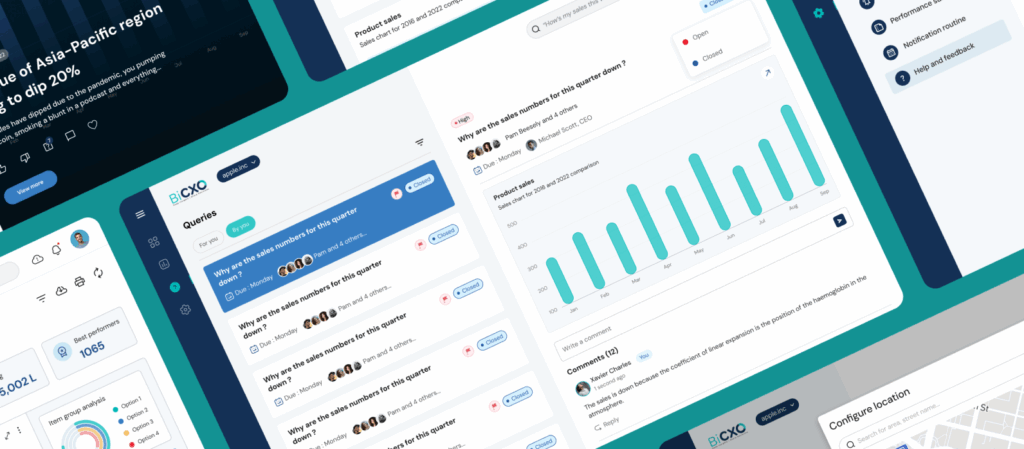
The BiCXO executive platform went through three significant structural pivots, each one triggered directly by a discovery finding that contradicted an assumption the team had carried into the project. That's not design instability. That's a process working exactly as it should: creating enough checkpoints that insight can reach the design before the design reaches the developer.
How Does the Design Process Make Discovery Consistent and Repeatable?
When discovery quality depends on a specific researcher's instincts, a particular designer's curiosity, or the luck of a talented team having a good engagement, you have a fragility problem. Some projects get the insight. Others don't. And you can't predict which.
A codified process, such as documented research protocols, synthesis frameworks, structured critique, and defined handoff standards, means that discovery quality lives in the system, not in specific individuals. Any competent team following the process surfaces the same category of insight. Consistently. Across every project.
What This Process Looks Like in Practice
Each stage in the product design process is designed to protect a specific type of insight and to create the right conditions for unexpected discoveries that lead to real innovation.
1. Contextual Research Before Any Screen Is Designed
Observe users in their actual environment. Not interviews about what they do, but observation of what they actually do. The gap between those two is where the most valuable insights live. This stage is the one most often skipped, and the one that produces the most rework when it is.
2. Structured Synthesis: Turning Observations into Insights
Raw observations do not drive design. Insights do. Synthesis is the process of finding the pattern across users, the behaviour that appeared repeatedly, the mental model that contradicts the brief, and the workaround that reveals the real need. Without structured synthesis, research produces interesting observations and nothing changes.
3. Structural Decisions Before Visual Design
Information architecture and user flows should be validated against research findings before starting visual design. Once visual design starts, structural changes become expensive enough that teams resist making them even when the evidence demands it. Sequencing protects the design from the sunk cost of polish.
4. Prototype Testing: Not to Confirm, but to Find What’s Still Wrong
Test with a small group of users using a realistic prototype and specific tasks.
Within a design sprint process or broader user experience design process, the goal is not validation; it’s discovery of the problems that are invisible in a static design review but immediately apparent when a real user tries to complete a real task. Every problem found here is a problem that doesn't ship.
5. Documented Rationale That Keeps Insight Traceable
Every significant design decision is documented with the finding or reasoning that drove it. This isn't bureaucracy; it's what allows the insight to survive stakeholder review, developer questions, and the inevitable request to "simplify" a decision that was made for a reason nobody can remember.
What This Means for How You Invest in Design
If design innovation is a discovery problem, and discovery is a process problem, then where you invest needs to shift.
- Stop Investing Here: Hiring more senior designers to produce better ideas from the same impoverished brief
- Start Investing Here: Building the product discovery infrastructure that gives any skilled designer the insight they need
- Stop Investing Here: Relying on stakeholder workshops as a substitute for user research, they answer different questions.
- Start Investing Here: Creating regular, structured user contact using the right UX research methods at every key decision point in the product design lifecycle, not just at the beginning.
- Stop Investing Here: Post-launch validation that confirms problems after the cost of fixing them has multiplied
- Start Investing Here: Pre-development prototype testing within a design sprint process or broader UX design methodology that finds issues early, when they take hours to fix, instead of entire sprints.
The Bottom Line
The most creative thing a design team can do is look hard enough at the right people, at the right moment, and have the process to act on what they find.
Talent matters. A great designer with rich discovery produces work that is both well-crafted and genuinely right. But talent without a structured UX design methodology leads to polished assumptions. And polished assumptions, approved by stakeholders who didn't know to question them, are the most common source of products that look good and don't get used.
The teams I've seen produce consistently excellent design outcomes aren't the ones with the most talented individuals. They're the ones where discovery is structurally protected, where the process creates enough contact with reality that innovation has somewhere to come from.
If your design work feels competent but not surprising, or if innovation in your product feels dependent on the right person having the right instinct at the right time, the question worth asking is: what does your discovery process actually look like?
That's a conversation I find genuinely useful to have with product teams, regardless of where they are in their design maturity.
Design That Doesn’t Guess; It Discovers
At Aufait UX, we believe great products don’t come from assumptions; they come from a strong product design process built on real user insight. As a leading UI UX design company, we help teams move beyond guesswork by embedding the right UX research methods and product discovery techniques into every stage of the product design lifecycle.
From early discovery to prototype testing and continuous refinement, our user experience design process ensures that every decision is grounded in reality.
Because when discovery is done right, design becomes clearer, faster, and far more effective.
👉Explore our UX Design Services
Ready to talk about your product?
Whether you're building from scratch or trying to fix what isn’t working, reach out to us. We’re happy to give you a clear, honest perspective before any engagement begins.
🔔Follow Aufait UX on LinkedIn for strategic insights grounded in real-world product outcomes.
Disclaimer: All the images belong to their respective owners.
FAQs
Researching for Gen Z requires a mobile-first observational methods that measure speed, cognitive load, and micro-interaction friction. We observe users in their natural settings. Gen Z navigation is non-linear; observing how they toggle between apps reveals Unexpected Workarounds that static interviews miss. In one of our projects, StockPe, we used research to ensure our gamified interactions matched the user's mental model of learning through play. If the architecture feels like a chore, Gen Z users will drop off within seconds.
The product design lifecycle reduces costs by identifying structural issues during the low-fidelity prototyping stage, where changes take hours rather than weeks. By validating information architecture and user flows before visual design and development begin, companies avoid the sunk cost of fixing features that have already been coded.
The most effective methods are those that prioritize observation over inquiry. These include:
• Contextual Research: Observing users in their natural environment to find unexpected workarounds.
• Usability Testing: Identifying silent struggles where users succeed at a task but experience friction.
• Structured Synthesis: Analyzing patterns across multiple users to identify mental models that contradict the initial project brief.
Research impacts design when the process includes structured synthesis and documented rationale at every checkpoint. We prevent insight decay by ensuring structural decisions are validated before visual design begins. By documenting why a design pivot happened as seen in our BiCXO platform project, the insight survives stakeholder reviews and developer handoffs, remaining traceable throughout the product lifecycle.
Skipping the discovery phase leads to polished assumptions and products that look aesthetically pleasing but fail to gain user traction. Without discovery, design quality depends entirely on individual instinct rather than a repeatable system. This often results in expensive rework during the development phase, as structural flaws only become apparent after the product reaches the user.
Table of Contents
Design That Listens Before It Decides!
Stop guessing. Start discovering what users actually need.
Get Expert UX Insights